Part 1 – 12 years

Updated: Feb 23
"Family is the place where you first learn to be silent."
— Gabriela Adameșteanu (from essays / interviews)
I was born in Timișoara, the only child in my family born there. My parents and sisters come from Transylvania, Cluj-Napoca and Sălaj, where they lived until ca. 1987. I came into the world in 1990 in another place, in a different rhythm, and perhaps that is where this discreet feeling that accompanied me for a long time began: that of belonging and, at the same time, of not fully belonging. Rooted, but not fixed. From one place, and yet among many.
My childhood was spent near Timisoara, in the village. First in Biled, then in Becicherecu Mic, two villages close and yet different. Dusty roads, large yards, animals, open gates, people who knew each other and knew who you were before you said anything. It was a simple childhood, not easy, but lively. I didn't have much, sometimes I had too little, but I had time and, for a while, the freedom to be a child, without having to explain it.
The 90s were a time of transition. For adults, a constant struggle; for us children, a wordless march forward. Money was always present, even when it wasn't talked about. Their concern hung in the air, in the pauses between conversations, in looks, in decisions made without explanation. I remember my father having a notebook in which he wrote down numbers, names, amounts. For me it was just paper; for him, responsibility. I didn't understand what was written there, but I felt the tension and took it on long before I had words for it. My body knew earlier than my mind that something wasn't sure.

I was twelve when my parents decided that one of them had to leave. As Europe began to open up and seasonal work became possible, this decision came quietly, almost pragmatically. Not out of desire, not out of courage, but out of necessity. There was no talk of what we wanted, only of whether there was another solution.
Sunday was the only day we all sat at the table. Two courses, sometimes meat, sometimes something sweet. At this table we were told that "things need to be put in order", that mother would go to Spain for a few months, to earn money, for a living, for debts, for a purpose greater than us. There was a lot of talk and yet nothing was explained to us, at least not to us, the children. The decisions had already been made. We listened without being asked, we were part of reality, but not of the decision. We only knew that "I will be taken care of". That was it.
My mother went to Spain, where the orange trees bloom , where there was work, hope and the promise of building something. For us. For me, Spain was not a place, but a word, a "far away", something warm. A blurry image that I saw on Sundays on TV, on the Enciclopedia show : beautiful landscapes, wild birds. A picture from soap operas, with beautiful people, but with no connection to my daily life. I didn't know what the absence of a parent meant and I didn't yet have the language for what was to come.

The day she left is not a noisy image in my memory. It is quiet, almost still, as if someone had stopped time for a moment. We were standing in front of the house waiting for the bus. The sky was clear, the sun was bright, the road was dusty, the neighbors were also outside. Life went on around us, as if it were a normal day. And maybe that was the hardest part. I was holding my cat, Budei. All my cats were named that, a name my neighbor, Laura, once gave me, the same neighbor who would later take care of me as if I were her own child. His fur was warm, his body alive, heavy enough for me to feel. Something that remained, something I could cling to while something else was leaving. I held him tighter to my chest, maybe tighter than usual. Maybe he was my support, or maybe my anchor. Or maybe it was just an attempt to keep at least something under control, lest something else disappear.
I didn't cry or ask questions. Not because I didn't feel it, but because there was no room for it. The fear was there, like a knot in my stomach, nameless and oppressive. My sisters were already adults and had started their own paths. I stayed with my father. Until then, I had been my mother's child; with her everything was gentler, easier to understand, less harsh. No one knew then how much this decision would change both of us, my father and me. How my early silence would shape my way of thinking, of feeling. This understanding came only after many years.
My mother hugged me, got on the bus, and sat by the window. She looked back once more, through the tinted window. I don't know anymore what she said, or what was going through her mind. My father exchanged a few words with the driver, then the others got on the bus again. The bus slowly started moving. And today, when I think about that moment, I hear the engine and the sound of the wheels on the dirt road. Many were inside, many were not just going far away, but forward toward hope, toward a life they wanted to make possible for their children.
There was no pain left behind that I could name.
There was a lack, a silent, empty space inside me that I didn't know existed.
how could it be closed.
I stayed with my father. He was strict, but trustworthy, demanding. Not out of harshness, but out of responsibility. With him, my world became tighter. I was no longer allowed to play on the street, there was only school, homework and home. The children from the neighbors often came to the gate and shouted after me. Sometimes they asked my father to let me out. "`Nea Petre, is Andreea allowed outside, just thirty minutes, `Nea Petre?", Cristina would shout. She is one of my oldest childhood friends and we have remained close to this day. While my father was working, our neighbor, Laura, took care of me. She would wait for me with hot food, on time, with a naturalness that gave me security. At some point, she was no longer just someone who supervised, but became family.

I learned early on to do things on my own. To cook, to wash, to take care of myself. My sisters followed their own paths. The eldest, Cristina, studied and later married in Germany. The second, Mariana, was always a free spirit and left home early.
I stayed.
Making phone calls was difficult back then. There were one or two phone booths in the village, first coin-operated, then card-operated. I rarely spoke to my mother, and the calls were short. Later, I was among the first to install a landline in the house. At one point, my father even bought a mobile phone, an Alcatel. The number still exists today and is the only phone number I can still say by heart, even in my sleep.
I remember well the Sundays when the phone rang. No matter what we were doing at the time, whether we were working in the garden or tinkering with the old Dacia 1310 – I can still see my father dropping everything and running across the front garden to the kitchen as soon as he heard the phone bell. These calls interrupted the day. They canceled everything else.
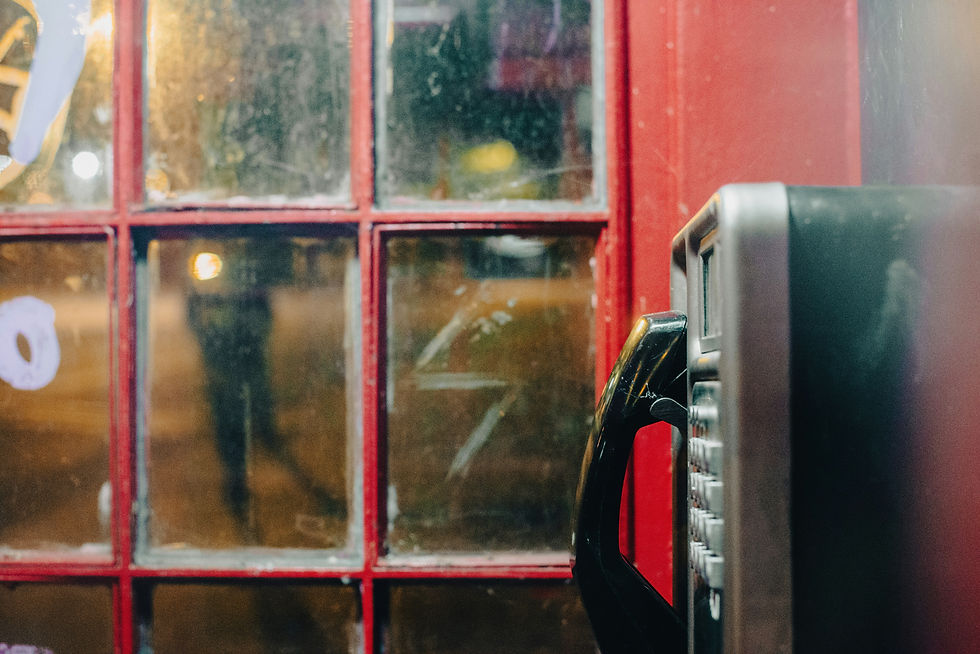
Mom couldn't talk much, five, maybe ten minutes. It was about organization, about money, about how we were doing and what to do next. I sat quietly at the kitchen table and waited. Hoping for a few seconds, for her voice, for my moment. Sometimes her credit would run out before I could even speak. Then I would remain silent, sad, but without protesting. I understood early on that there were things more important than me. And, at a certain point, you get used to waiting.
At the time, we were living in a house that belonged to an acquaintance from Germany. It was common for people to stay in houses rent-free, as long as they took care of the yard and garden. Later, the opportunity arose to buy the house across the street, also from an acquaintance from Germany, who had not lived there for a long time. And just like that, a few months spent away from my mother turned into years. From hope, there was postponement, and life remained suspended, somewhere between leaving and staying.
You may find yourself in these lines, even if your places were different and your story followed a different path. Early expectation, functioning, silence out of necessity are experiences that many children live without ever learning to understand. From my point of view, such early adaptations leave traces: children develop a fine sense of responsibility, of the states of others, of unspoken things, and learn to postpone their own needs long before they can name them. These strategies are not born of power, but of the need for security and attachment and, often, accompany us into adulthood.
If you feel that your story touches mine, I invite you to write to me, in a whisper or clearly, at length or fragmentarily, with a name or anonymously. This archive is a space for memories that have not had their place for a long time. In the next part I will tell you more about my adolescence, about my school years and about how, step by step, I found my own path, not straight and not planned, but by searching, learning and trying, in retrospect, to give a voice to the child of that time.


